It was quite a good idea for Mini to make a coupe version as the fifth body derivative in the model line-up because the earlier variations basically covered the widest customer expectations possible. If you loved the Mini for what it has always been, you'd easily go for the classic Hatch. Want more fun and there's the Convertible. Need to be a little pseudo and the Clubman awaits you. Crave for family practicality and the Countryman's yours. But if you needn't any of those values but want a genuinely good looking and driving Mini for yourself, the Coupe is the perfect choice. The removal of the compartment for rear passengers has allowed Mini to put in place a three-box profile to give the Coupe a nice coupe profile. Adding more fun is a helmet-style roof distinctively coloured from the body. But that's just about it when it comes to the cosmetic test because the rest of the Coupe is plainly a Mini. There's no differentiation when it comes to the lights or front grille. Simply, it's the roof that holds the key to your liking of the Coupe. Despite the booted appearance, the Coupe's boot lid opens in a hatch manner (together with the rear windscreen) which, in essence, makes the Coupe more of a liftback. No rear perches means that the Coupe has that kind of boot space rarely seen in any Mini. Mini has also taken the opportunity to design the interior boot cover with stylish twin cowls. In functionality terms, the Coupe is all what two people at most would ever need. And turning to aesthetics again, the interior reaches the same dead end as the exterior in which distinction is only confined to the rear bit. The front seats, steering wheel and fascia are like in other Minis, with the latest aspect being fun in appearance but flawed in ergonomic terms. But you really can't blame Mini for the vast similarities the Coupe bears to its other siblings. It's a diversification of a specific model, in the first place, and not entirely all-new on its own. Hence, the need to share as many parts as possible. So if you're expecting the Coupe to feel distinctively special on the move, prepare to frown because it doesn't. However, that can never be considered a bad thing since Minis have always been known to be cars that are great to drive. The running gear of the Coupe is predictable enough: the engines and transmissions are the ones you have seen around since the Mini's facelift in second-gen form with no changes in power and torque outputs. The one highlighted here for the Coupe test drive in Germany this month is the range-topping 211hp 1.6-litre petrol-turbo and six-speed manual gearbox for the so-called John Cooper Works guise. The chassis setup is basically just like in other Minis including a sporty tuning. Absence of rear seats has also allowed engineers to place a cross-member in their place to further increase body rigidity for even better handling. With this in mind, the Coupe drives very much like the Hatch. Performance is brisk in a straight line and impressive when picking up from low engine revs and when exiting corners. There's no doubting the Coupe's handling, too. This is as sporty as a car of this small size gets, and the way it grips at high speeds when slamming down the autobahn to its top speed is quite amazing. Special thanks go to a new rear spoiler that pops up at over 80kph (and disappearing again when dipping below 60kph). Ah, that spoiler, the item much talked-about in the Coupe which many critics have described as more a cosmetic gimmick rather than one for dynamic reasons. But as things turned out during the international driving trials, there seems to also be much weight leaning towards the latter factor. The Coupe also goes around into corners with the same conviction as the Hatch: superbly agile, finely balanced and virtually free of understeer. It's equally as capable as a rear-drive sports car like the Mazda MX-5, unless your idea of looking out from the car is through the side windows. Speaking of the driving view, the Coupe does feel different from the Hatch in the sense that the front windscreen is more slanted and not as upright as in the Hatch or Clubman. And the Coupe's rear view is limited, although the view of the spoiler (and the stripes painted on it) looks cool. A more serious downside (in terms of marketing and not engineering) is the unavailability of an automatic gearbox. Mini still insists that JCW cars must be manual. This means that Thais won't be getting this powerful JCW, unless they order it. Instead, the Cooper S and Cooper variants will come at the year-end with six-speed slushers, the prior spec having steering-mounted paddle-shifters. There wasn't the chance to sample the Cooper S, but it's fair to say _ based on previous driving experiences of other Minis _ that the Coupe with this power treatment will still be a fast car to drive. You need not have suspicions about the Coupe's ride: the underlying firmness of the chassis makes for a stiff ride, even on the slightest of potholes on German roads. We'd easily say that the ride on Bangkok streets would be terrifyingly hard.


 Spain has been named among the top five destinations that people would consider moving to if they were going to leave the UK, new research has found. A survey conducted by Post Office International Payments revealed that the European nation, which was the fourth most popular location named in the poll, was a possible choice for ten per cent of those questioned. The firm also pointed out that it was the highest-placed nation where English is not the first language. One of the top reasons given for buying a property in Spain or elsewhere in the world is the chance to have a better quality of life, while other reasons to move included warmer weather, discovering a new culture and the adventure of emigrating. Mortgage provider Conti published figures earlier this month showing that it has received seven per cent more enquiries about relocating to Spain so far in 2011 than last year. Overall, the country accounts for 31 per cent of all queries handled by the organisation, with only France garnering more interest.
 U.S. deep-sea explorers must turn over to the Spanish government 17 tons of silver coins and other treasure recovered from a sunken Spanish galleon in 2007, a federal appeals court ruled Wednesday. But Tampa, Fla.-based Odyssey Marine Exploration has vowed to continue the protracted legal battle over the cache, which could be worth as much as $500 million. In a statement Wednesday, the company said it would take the next step in the appeals process, requesting a hearing before all the judges of the 11th Circuit Circuit Court of Appeals. That came after a three-judge panel of the 11th Circuit had issued its ruling in a case that could case spill over to treasure hunts for years to come. "We are certainly disappointed by the 11th Circuit's ruling," said Melinda MacConnel, Odyssey's vice president and general counsel. "We believe the U.S. Constitution and all other applicable laws give jurisdiction to the U.S. courts to determine the rights of Odyssey, Spain and all other claimants in this case." Attorneys for Odyssey asked the three-judge panel to overturn a lower court ruling and uphold the "finders keepers" rule that would give the treasure hunters the rights to coins, copper ingots, gold cufflinks and other artifacts salvaged in April 2007 from the galleon found off the coast of Portugal. Spain's lawyers countered that U.S. courts are obligated by international treaty and maritime law to uphold Spain's claim to the haul. The ship, called the Nuestra Senora de las Mercedes, was sunk by British warships in the Atlantic in 1804 while sailing back from South America with more than 200 people on board. Odyssey created an international splash in May 2007 when it announced that it had recovered more than 500,000 silver coins and other artifacts from the wreck and flew the treasure back to Tampa. Spain went to the U.S. District Court in Tampa, where the company is based, claiming ownership. Odyssey disputed the Spanish government's ownership of the valuable cargo. James Goold, a Washington attorney who represented the Spanish government in court, called the appeals court decision "a complete and much-deserved victory." "The court recognized that stripping the sunken Spanish ship of coins to sell to collectors is no more appropriate than to do that to the USS Arizona in Pearl Harbor," Goold said. "We are pleased and gratified that the court recognized U.S. obligations under international law, just as Spain respects the sanctity of sunken U.S. Navy ships." A federal judge sided with Spain in the first round of the tug-of-war in June 2009, accepting the Spanish government's argument that it never surrendered ownership of the ship and its contents. Attorneys argued the case before the 11th Circuit panel in May. Odyssey had argued that the wreck was never positively identified as the Nuestra Senora de las Mercedes. And if it was that vessel, then the ship was on a commercial trade trip — not a sovereign mission — at the time it sank, meaning Spain would have no firm claim to the booty. International treaties generally hold that warships sunk in battle are protected from treasure seekers.
 Designer clothes owned by Hollywood legend and fashion icon Elizabeth Taylor, including haute couture by Chanel, Yves St. Laurent and Dior, will be sold at auction in New York, Christie's said on Wednesday. The silk chiffon dress that the Academy Award winning actress wore for her first wedding to actor Richard Burton will be among the nearly 400 times included in the four-day series of sales in December. "One of the many great treasures within Elizabeth Taylor's vast collection is her extraordinarily well-preserved wardrobe," said Marc Porter, chairman and president of Christie's Americas. "The stunning outfits she wore to galas, award ceremonies, AIDS benefits and even her own weddings to Richard Burton are all here, lovingly maintained along with the handbags, shoes, hats and other accessories that completed her superstar looks," he added in a statement. The December 13-16 sales, which span over 50 years of fashion, will follow a global three-month tour which will also includes Taylor's renowned jewelry, fine art and memorabilia. It will be the second in a series of auctions from the estate of the legendary film star who died in March. Nearly 6,000 people viewed the collection this month when it was displayed in Moscow. Stops in Los Angeles, London, Dubai, Geneva, Paris, Hong Kong and New York will follow. Meredith Etherington-Smith, Christie's' curator for the fashion auction, described the items as "a highly personal collection." "This is not a red carpet wardrobe edited by stylists but a treasure trove of looks chosen by the last of the great movie stars. Many of the pieces in this lifetime collection were couture, custom made for Ms. Taylor by designers who became her close friends, including Valentino Garavani, Gianni Versace and Gianfranco Ferre." Some 68 of Taylor's most iconic looks will be auctioned at a gala evening sale on December 14, followed by hundreds of other fashion items and accessories in other sales. Highlights will include a Versace beaded evening jacket arrayed with portraits of the actress in some of her famous movie roles, which is estimated to sell for up to $20,000. The sunflower yellow dress by Hollywood designer Irene Sharaff that Taylor wore to her 1964 wedding to Burton has an estimated sale price of $40,000 to $60,000. Taylor's estate was valued at up to $1 billion when she died of congestive heart failure at age 79. A portion of the proceeds from the exhibitions, events and publications related to the auction will be donated to The Elizabeth Taylor AIDS Foundation, which the actress founded in 1991. The series of Taylor sales are individually devoted to jewelry, haute couture, fashion and accessories, decorative arts and memorabilia from Taylor's Bel Air home, and Impressionist and modern art.
 Hosted and created by Bodegas Paternina at its Conde de los Andes winery in Ollauri, the exhibition entitled “Tinta, Sangre y Vino” – “Ink, Blood and Wine” – celebrates the writer’s visit to the winery 55 years ago and marks 50 years since his death.


 Located on the Southern Spanish Costa del Sol, in the heart of the 'Golden Mile' only 5 minutes to Old Town Marbella and Puerto Banús, with 320 days of sunshine and a mild year round average temperature of 21ºC). Open year round, the renowned Marbella Club Hotel, was once the private residence of Prince Alfonso von Hohenlohe. The 121 luxury bedrooms and suites, spread over the beach front resort, harmonize with 14 Andalusian-Style villas throughout 42,000 square meters (452,083 sq. ft.) of lush subtropical gardens. Each guest room is decorated with the finest fabrics and Mediterranean interior design, reflecting the surrounding elements and has furnished balcony / terrace and spacious luxurious bathrooms with separate shower and bath. The 14 charming villas are in the unmistakable style of the Hotel, faithful replicas of traditional Andalucían architecture, blending harmoniously with their surroundings, and are ideal for families and guests seeking to enjoy more space and privacy. The 2, 3 or 5 bedroom villas have their own private garden and heated pool, providing guests with both comfort and privacy during their stay. Both of the 2 outdoor heated swimming pools, one with seawater invite you to relax in the surrounding gardens or to enjoy the views of the Mediterranean through the palm trees of the famous beach club.
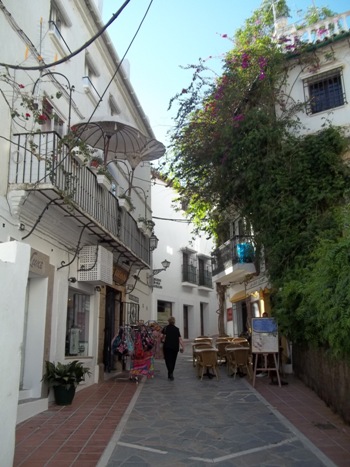 strange how so many of us go to Málaga but never think to stay. There are direct flights to this thoroughly Spanish seaside city from 22 UK airports, and the majority of the 12 million passengers who pass through its bright and airy Pablo Ruiz Picasso airport are British. Desperate for sunshine and sherry, we all seem programmed to jump into our hire cars and hare off to the picturesque pueblos blancos inland, or board the coaches pushing west to the brazen beach resorts of Torremolinos, Fuengirola and Marbella. And how loco – sorry, crazy – is that? If we only lingered, visitors would discover a smart, welcoming city that ticks all the boxes required for a rewarding cultural break. The abundance of flights means fares are often reasonable, and if you search online you can bag a room in a good, central hotel for under £100 a night. The weather can stay fine until November – in The Face of Spain, the Hispanophile writer Gerald Brenan recounts how he met a man who once spotted eight bishops staying there one winter – a sure sign that Málaga "must have the best climate in Spain". Wandering through the venerable trees of the elegant Paseo del Parque, as workers add the finishing touches to a new marina and a waterfront promenade invitingly named El Palmeral de las Sorpresas (the Palm Garden of Surprises), I can understand why Malagueños feel their city deserves to be more highly regarded. The port failed in its dream of becoming Spain's European Capital of Culture 2016 (that will be San Sebastián) but everywhere you stroll there is impressive sprucing-up.
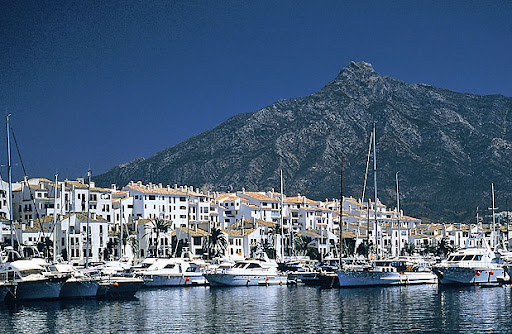 While property prices in Spain have plummeted in recent years, the luxury end of the market appears to be holding up, making Marbella a good option for those planning to purchase a home in the country. This is the assertion of the Wall Street Journal, which noted in a recent article that average real estate values in Spain have fallen by between 15 and 40 per cent since the financial crisis began. According to the publication, there is "still a sense of long-term economic stability" in Spain, which may appeal to investors hoping to pick up assets at low prices. Commenting on the appeal of Marbella in particular, president of Sotheby's International Realty Philip White stated: "It has been a major destination for years. It is safe, international, the restaurants are excellent and it has a sense of vibrancy." Speaking to Bloomberg this week, Fernando Encinar, head of research at Idealista.com, claimed that vendors in Spain are being forced to drop their asking prices in order to make a sale. This is due, in part, to the lack of flexibility among mortgage lenders, he added.


